




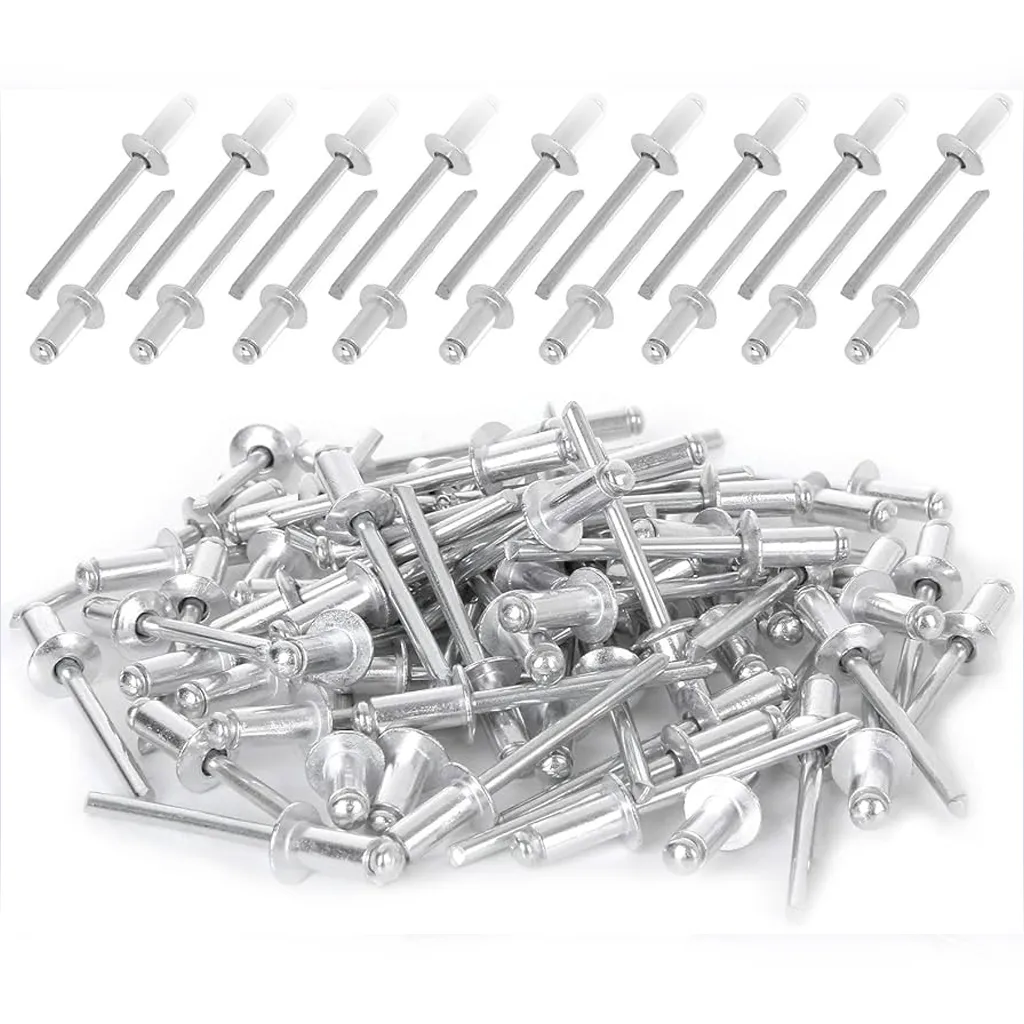
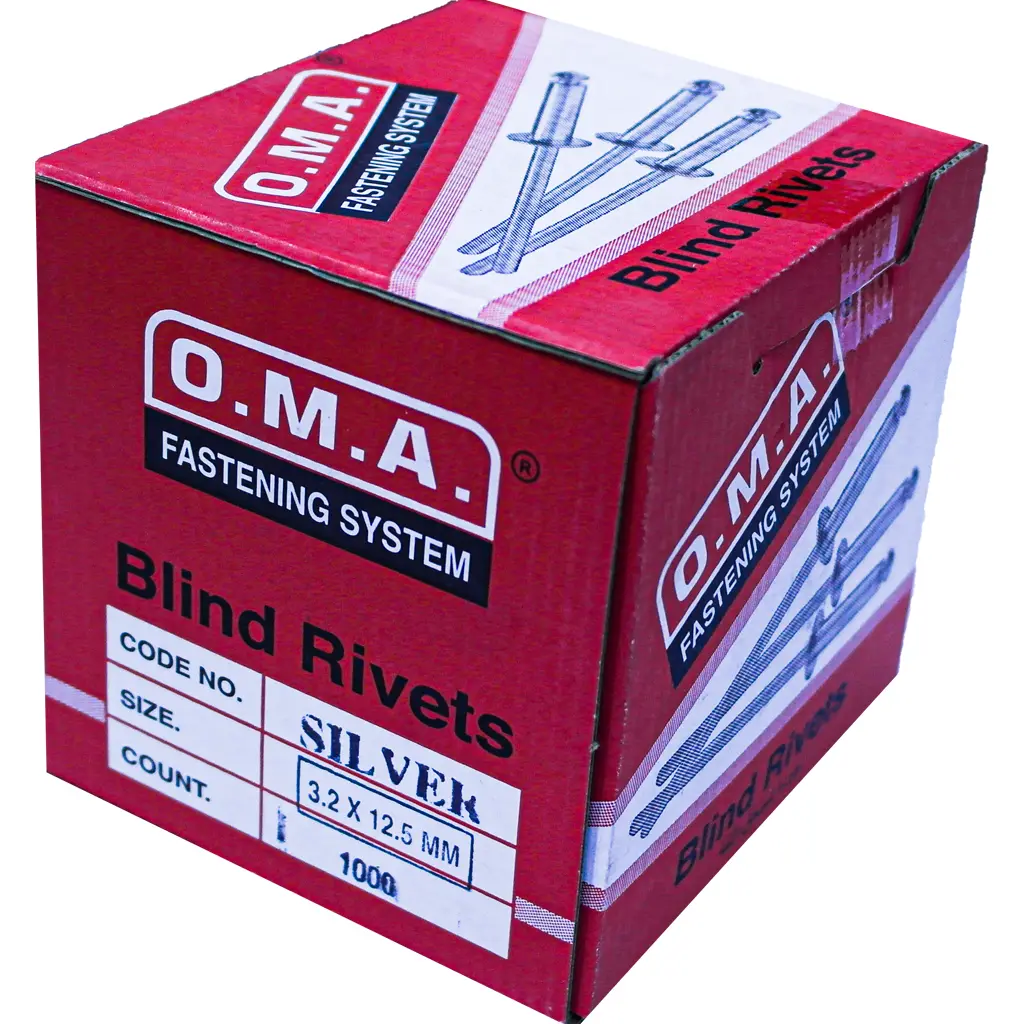
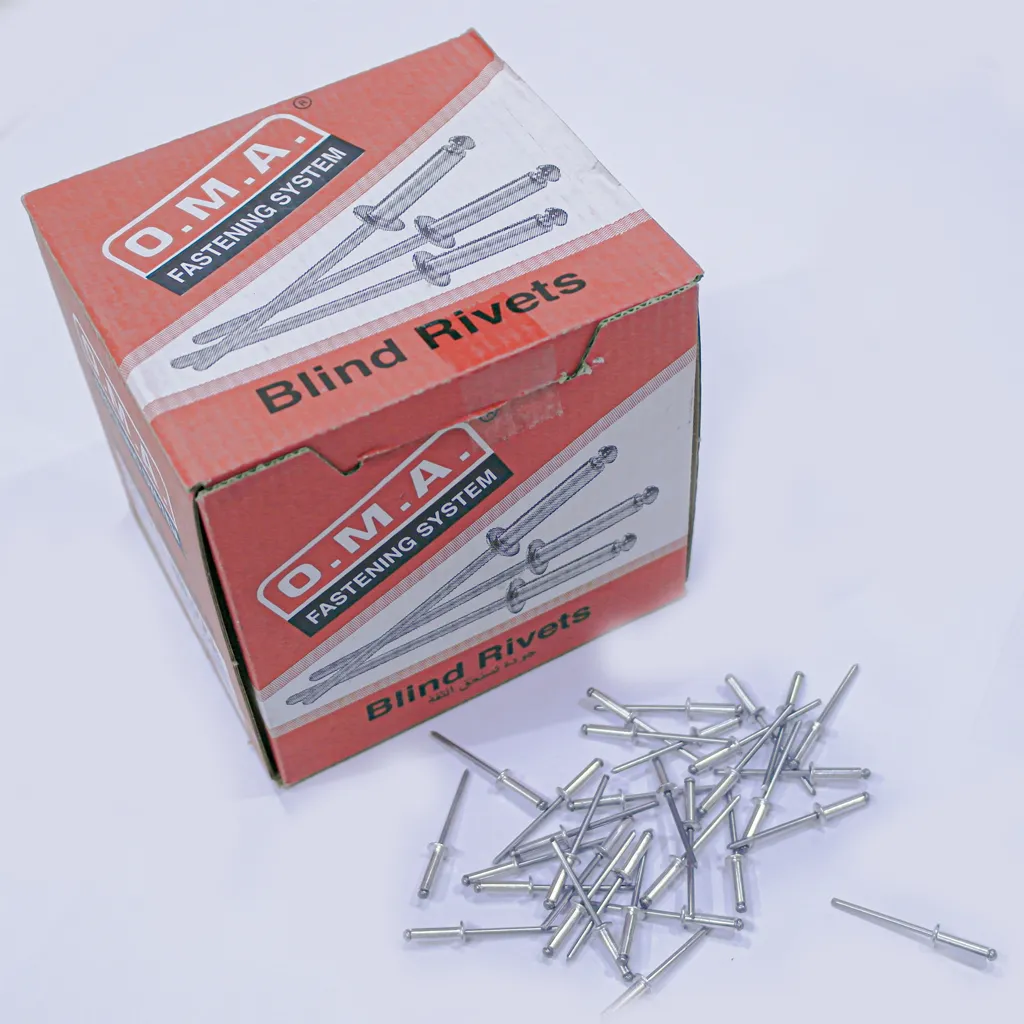
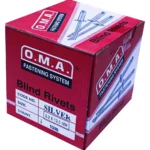
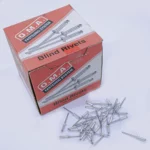
Blind Rivets – Single-sided Fastening For Metallic and Composite
ر.س26.45 Inclusive of VAT
Blind rivets (pop rivets) fasten sheet metal, composite panels, and HVAC ductwork from one side only, no access needed to the back of the joint. Used in ductwork fabrication, panel assembly, refrigeration equipment casing, and light structural connections. Aluminum and steel mandrel options for different load and corrosion requirements. Sold in bulk quantities for trade and project supply.
Key Features
- Single-sided installation, no rear access required
- Suitable for metallic and composite substrate materials
- Aluminum rivet body with steel mandrel (standard combination)
- Strong mechanical joint resistant to vibration and pull-out
- Flush installation profile on the visible face
- Multiple diameter and grip-range options for different material thicknesses
- Used in HVAC ductwork, panel fabrication, composite cladding, and general sheet metal work
Most fastening options require access to both sides of the joint. Bolts need a nut on the back. Screws need clearance to drive. Welding needs line-of-sight and heat. Blind rivets are designed for the situations where you can only reach one face, a closed duct section, a composite sandwich panel edge, a fabricated refrigerant unit casing where the inside is inaccessible once assembled.
For HVAC ductwork fabrication, blind rivets assemble rectangular duct sections and close off panels where Pittsburgh lock or snap-lock seam isn’t possible. They’re standard for attaching stiffener angles inside large duct sections, fastening access door frames, and closing off inspection openings. In refrigeration equipment manufacturing, blind rivets join panels where screws would back out from vibration over time.
The standard aluminum-body steel-mandrel rivet covers most HVAC and light sheet metal applications. For coastal Saudi sites in Jeddah and Jubail, all-aluminum rivets eliminate the galvanic corrosion risk that occurs when a steel mandrel stub sits in an aluminum rivet body in salt-air environments.
Grip range matters. A 4.8mm x 12mm rivet with a 3.5 to 5.5mm grip range won’t set correctly on 8mm combined material thickness. Measure your material stack before specifying.
How to Install Blind Rivets Correctly
Drill the hole to the rivet’s specified drill diameter, not larger, not smaller. An oversized hole lets the rivet body spin during setting and prevents the mandrel from properly deforming the back of the rivet. The rivet will pull through rather than clamp. Check the rivet manufacturer’s drill size specification for each rivet diameter.
Deburr the hole on both faces if the material is thick enough to have a burr. A sharp burr on the back face cuts into the rivet flange during setting and weakens the clamping force.
Insert the rivet mandrel stem into the rivet gun nose piece until it stops. Place the rivet body into the pre-drilled hole. Squeeze the rivet gun handles firmly in a single smooth stroke or multiple strokes if using a manual gun on a larger diameter rivet. The mandrel breaks at the snap point when the rivet is fully set, you’ll hear and feel it.
Inspect the set rivet. The mandrel break should be flush with or slightly below the rivet head face. A mandrel that protrudes means the rivet wasn’t fully set, redrill and replace. A rivet head that has cracked or deformed unevenly means the hole was oversized or the material was too thin for the grip range.
On HVAC ductwork in Saudi conditions: pre-drill holes at regular spacing before beginning rivet installation on a duct section. Trying to hold a duct panel in position with one hand while drilling with the other leads to misaligned panels and oval holes. Use clamps or a second person to hold position while drilling the full hole pattern, then rivet.
Blind rivets are permanent fasteners they don’t require periodic maintenance once installed. What they do require is periodic inspection in service.
On HVAC ductwork carrying high-velocity air, riveted joints should be inspected annually for air leakage. A popped rivet (mandrel pushed back through) leaves an air leak path. Tap-test riveted joints a properly set rivet makes a solid tap sound, a loose or popped rivet sounds hollow. Replace any compromised rivets with a one-size-larger diameter rivet in the same hole, sealed with foil tape on the interior face if the duct is pressure-tested.
On coastal Saudi sites, inspect aluminum rivets with steel mandrel stubs for galvanic corrosion at the mandrel/rivet interface annually. A white powdery deposit around the rivet head on the surface face indicates active corrosion at the interface. Replace with all-aluminum rivets in those environments.
Why Buy Blind Rivet from Cool.sa
Blind rivets are a high-consumption fastener on any HVAC or MEP project a medium-sized ductwork job uses hundreds of rivets across multiple sizes. cool.sa supplies blind rivets in the quantities that trade and project work demands: individual packs for small jobs, bulk quantities for project supply.
All-aluminum and aluminum-steel mandrel types are available in the standard metric and imperial diameters used across Saudi construction and industrial work. Local stock, no minimum order.
Contact us at sales@cool.sa or +966 54 066 3777.
FAQ
Q1. What diameter blind rivets are most commonly used in HVAC ductwork?
3.2mm and 4.8mm cover most HVAC ductwork applications. 3.2mm suits lighter 0.6mm to 1.0mm galvanized steel duct material. 4.8mm is used for heavier sections and structural connections where higher shear strength is required.
Q2. Can blind rivets replace screws in HVAC ductwork?
In many ductwork assembly applications, yes. Rivets are vibration-resistant and reduce the risk of loosening compared to screws, while also providing a cleaner seal against air leakage. However, for detachable components such as access panels and cleanout points, screws should be used since rivets are permanent once set.
Q3. Are aluminum blind rivets suitable for outdoor use in Saudi Arabia?
Aluminum rivets offer good corrosion resistance in standard outdoor environments. In coastal areas exposed to salt spray, all-aluminum rivets with aluminum mandrels are preferred to reduce the risk of galvanic corrosion at the mandrel break point.
Q4. What rivet gun is needed?
Standard blind rivets can be installed using either a manual or pneumatic rivet gun. Manual tools are suitable for up to 4.8mm diameter rivets. For 6.4mm rivets or high-volume installation work, a pneumatic rivet gun is recommended for speed and efficiency.
 English
  العربية
Reviews
There are no reviews yet.