




Roof Exhaust Fans in Saudi Arabia
If you’ve ever walked into a warehouse in Riyadh at 2pm in July, you know exactly why roof ventilation isn’t optional. Ambient temperatures pushing 47°C outside, another 10 to 15 degrees of radiant heat from the roof structure above and if there’s no exhaust fan doing its job, the people and equipment inside are suffering for it. Productivity drops. Electronics fail early. Workers overheat. That’s not theory, that’s what happens on sites without proper roof exhaust systems.
At cool.sa (Al-madina cool) , we stock roof exhaust fans sized and rated for GCC conditions. Not catalogue units spec’d for European climates. Actual equipment that can handle continuous operation in extreme heat, dust-laden air from shamal events, and the kind of humidity you get in coastal facilities near Jeddah or Dammam.
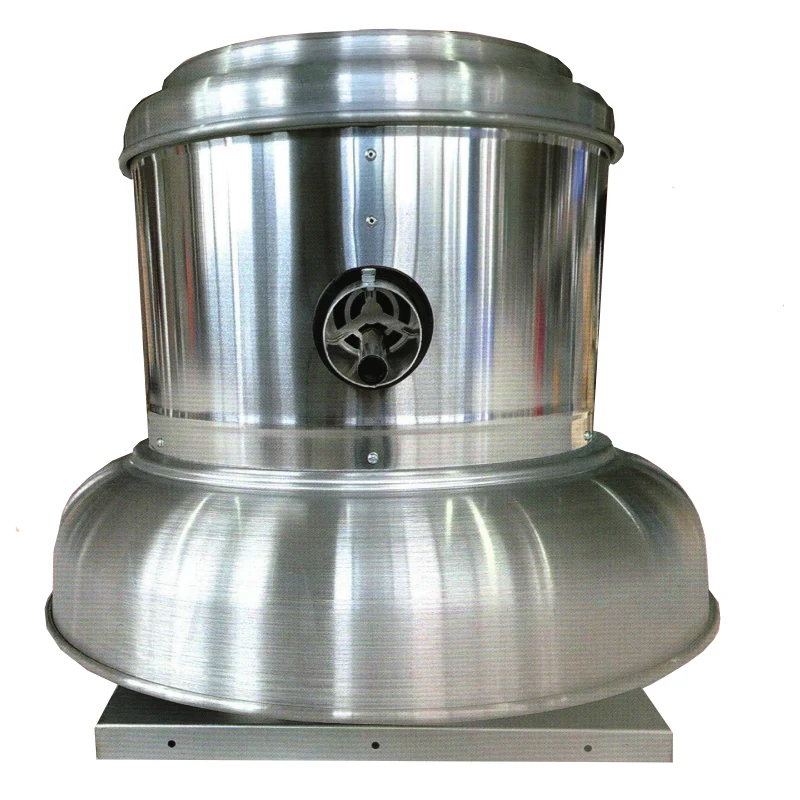
What Type of Roof Exhaust Fan Do You Actually Need?
There are three main configurations you'll encounter. Getting this wrong costs you money twice, once on the wrong purchase, once when you replace it 18 months later.
Centrifugal Roof Ventilators
The workhorse for most commercial applications. High static pressure handling makes them suitable for ducted systems where air has to travel through a run of ductwork before it exits the building. Common in pharmaceutical warehouses, food storage facilities, and server rooms where directional airflow matters. If your system has duct runs over 6 meters, this is usually what you want.
Axial Roof Fans (Low-Profile Propeller Type)
Better for high-volume, low-resistance applications. Open warehouses, covered parking structures, aircraft hangars. They move a lot of air fast, but static pressure handling is limited. Pairing them with high-resistance duct runs is a common mistake. Truthfully, most light industrial buildings in Saudi Arabia are well-served by axial units when the roof penetrations are designed right.
Gravity Ventilators (Wind-Driven)
No motor. No power draw. Useful as a supplementary exhaust strategy or in applications where electrical power at rooftop level is difficult to run. They rely on natural air movement and thermal buoyancy. You won't move serious CFM with these alone, but they work 24/7 without touching your SEC electricity bill.
Buying Guide: What to Check Before You Order
Specification errors are more common than they should be. Here's what matters in the GCC context.
- Motor IP rating: IP55 minimum for any rooftop installation. Coastal sites near Dammam should be looking at IP65 for corrosion resistance. Salt air degrades unprotected motors fast.
- Ambient temperature rating: Standard motors are rated to 40°C ambient. Rooftop units in Saudi Arabia see 50 to 55°C ambient at the motor during peak summer. Specify high-temperature motors rated to at least 55°C, or insulated Class F/H windings.
- Airflow rate (m3/h or CFM): Calculate the required air changes per hour for your space. For a standard warehouse with light occupancy, 6 to 10 air changes per hour is a reasonable baseline. Industrial processes generating heat or fumes need higher rates, sometimes 20 to 30 ACH.
- Noise level: If the roof fan is above an office or meeting space, check the dB(A) rating at operating speed. Centrifugal units generally run quieter than axial under load.
- Drive type: Direct-drive units are lower maintenance. Belt-drive units allow speed adjustment but add a maintenance point. For Saudi conditions, direct drive is usually preferred unless you have a dedicated maintenance team on-site.
Applications by Industry
Roof exhaust fans serve different functions depending on the application. Here's how to think about selection by sector.
- Warehouses and logistics: Heat extraction to protect stored goods and workers. Axial fans with high flow rates are standard.
- Commercial kitchens: Grease-rated exhaust fans with stainless or coated housings. Standard units are not appropriate here.
- Industrial manufacturing: Process heat and fume extraction. Spark-resistant or ATEX-rated fans may be required depending on materials handled.
- Data centers and telecom: Precise airflow management, redundant fan configurations. Centrifugal units with speed control are common.
- Mosques, malls, and public buildings: Low-noise, aesthetically integrated roof ventilators. Weather caps and bird screens are standard requirements.
SASO and Local Compliance
SASO regulations and Saudi Building Code requirements for ventilation are real compliance considerations for any commercial or industrial project. Specifying undersized or sub-rated equipment creates problems at inspection time. All roof exhaust fans available through cool.sa are sourced from manufacturers with CE and ISO certifications, and many carry SASO registration for use on Saudi projects. If you need compliance documentation for a specific product, contact our team before ordering.
Common Installation Mistakes in the GCC
Oversizing sounds safe, but it's actually a problem. An oversized fan cycling on and off constantly wears out the motor faster than a correctly-sized unit running continuously. Undersizing creates the obvious issue of inadequate ventilation, but it also causes motors to run at sustained high load in extreme ambient heat, shortening service life significantly.
The other mistake I see regularly: mounting orientation. Some axial roof fans are rated for horizontal shaft operation only, and running them at an angle off vertical causes bearing wear. Always check the installation instructions for permitted mounting angles.
Frequently Asked Questions
Q1. What size roof exhaust fan do I need for my warehouse?
Calculate your warehouse volume in cubic meters, then multiply by the required air changes per hour (typically 6 to 10 for general warehousing). This gives your required airflow in m³/h. Divide that airflow across the number of fans you plan to install to determine the required airflow per unit.
Q2. Can roof exhaust fans handle Saudi summer temperatures?
Standard units rated to 40°C ambient are generally not adequate for rooftop installation in Saudi Arabia. Specify motors rated to at least 55°C ambient, with Class F insulation or higher. Always verify the motor nameplate specifications rather than relying solely on the product title.
Q3. Do I need a weather cap with a roof exhaust fan?
Yes. A weather cap protects the fan motor and housing from rain, dust ingress, and bird nesting. For Saudi Arabia, a louvered weather cap with dust filtration is recommended for locations exposed to shamal winds and airborne dust.
Q4. What is the difference between a centrifugal and axial roof fan?
Axial fans move large volumes of air at low static pressure and are ideal for open spaces with short or no duct runs. Centrifugal fans generate higher static pressure and are better suited to ducted ventilation systems. Selecting the wrong fan type for the application is one of the most common specification mistakes.
Q5. Is installation included when I buy from cool.sa?
Equipment is supplied separately from installation services. We can refer you to certified HVAC contractors in your region for installation support. Contact our team for further details and recommendations.
 English
  العربية