



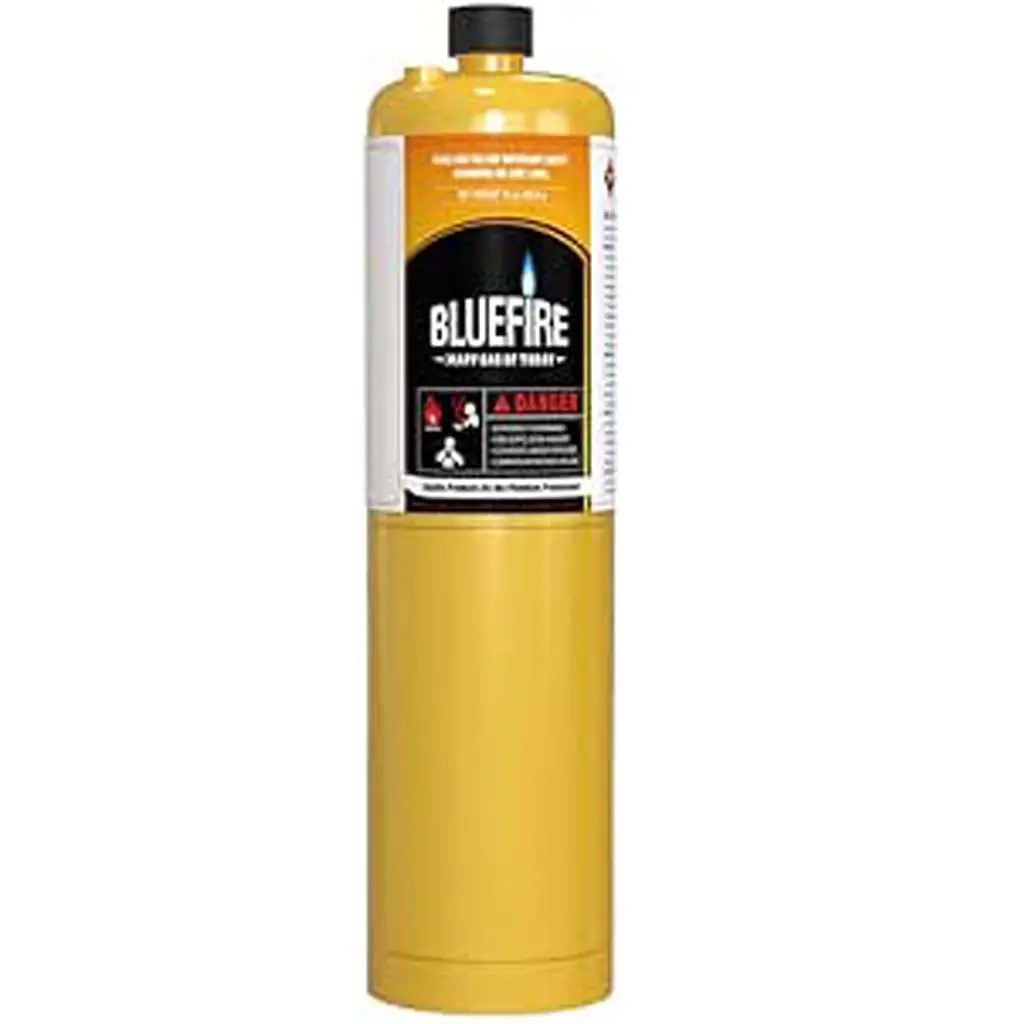
Blue Fire Mapp Gas Cylinder 16.1oz Premium Finish
ر.س50.00 Inclusive of VAT
The Blue Fire 16.1oz MAPP gas cylinder delivers high-temperature flame for HVAC copper pipe brazing, silver soldering, and plumbing work. Compatible with standard screw-on torch handles. MAPP gas burns hotter than propane, shortening heat-up time and improving flow on copper-phosphorus brazing alloys. Single-use disposable cylinder for field service kit use. In stock at cool.sa Saudi Arabia.
Key Features
- 16.1oz (456g) net MAPP gas content
- Higher flame temperature than standard propane cylinders
- Compatible with standard screw-on gas torch handles and tips
- Disposable single-use cylinder, no refill deposit or return
- Suitable for copper-to-copper brazing, silver soldering, and light heat work
- Portable size for HVAC field service van kits
MAPP gas is the fuel of choice for HVAC technicians who braze copper refrigerant lines in the field. Propane works, but it’s slower to heat the joint and less forgiving on larger diameter fittings like 7/8 inch or 1-1/8 inch suction lines. MAPP burns at around 2,020°C compared to propane’s 1,980° C. The difference sounds small but it’s noticeable on a 28mm copper fitting when you’re working fast and the next joint is 5 feet away.
The Blue Fire 16.1oz cylinder is the standard field size. It fits in a tool bag, weighs under 600g full, and gives enough gas for a full day of refrigerant piping work on a split system installation. Most HVAC technicians carry two cylinders on the van and swap when the flame drops off, you feel the heat output drop before the cylinder runs fully empty.
The screw-on connection is the standard universal fitting used across most handheld torch handles sold in the GCC market. Bernzomatic-style handles, pencil torches for fine brazing work, and larger trigger-start plumbing torches all use the same 5/8-18 UNF male thread that this cylinder’s valve provides.
Don’t use MAPP gas cylinders for cutting. Cutting requires oxygen, a cutting-specific torch body, and proper cutting tips. A MAPP cylinder on a standard brazing torch does not have the oxygen supply or gas delivery rate for cutting operations.
How to Use This Cylinder Safely and Effectively
Attach the cylinder to your torch handle by screwing it on hand-tight, do not use tools to over-tighten the connection. The valve seals on a threaded gas fitting with hand-tight torque. Over-tightening damages the valve seal and causes leaks at the thread.
Before lighting, test the connection. With the torch valve closed, attach the cylinder and place your hand near the connection for 5 seconds. You should feel nothing. A gas smell or hiss means the thread isn’t seating correctly, so don’t light the torch. Remove the cylinder and re-thread it. A cross-threaded gas cylinder connection is a safety incident.
Light the torch with a spark igniter, not a cigarette lighter. Holding a lighter under a torch tip means your hand is in the flame path when gas catches. Use a piezo igniter or a flint spark tool.
For field brazing in Saudi summer conditions: ambient heat affects nearby materials faster than in cooler climates. A fitting in direct 45°C sun radiates heat into surrounding insulation and wiring faster than at 20°C ambient. Shield nearby materials with a fire blanket before applying heat. Keep a damp cloth accessible for immediate surface cooling after the joint is made.
When the cylinder is near empty, flame output drops noticeably. Don’t attempt to braze large fittings (7/8 inch or above) on a near-empty cylinder, inadequate heat produces cold joints that leak. Swap to a fresh cylinder for the final joints on any job.
Safe Storage and Handling
Store cylinders upright in a shaded, ventilated location. Saudi outdoor storage areas in summer can reach 60 to 65°C, above the safe storage temperature for pressurized disposable gas cylinders. Keep them out of direct sun, out of vehicle cabins during the day, and away from heat sources.
Don’t store cylinders in enclosed vehicle spaces (car boots, sealed tool boxes) during Saudi summer. Temperatures in an enclosed vehicle boot can exceed 70°C on a hot day in Riyadh or Dammam. A cylinder under pressure at that temperature is a pressure relief event risk.
Used cylinders: puncture and dispose of per local municipal waste regulations. Don’t throw pressurized cylinders into a skip or a fire, even a “used” cylinder retains some residual gas pressure.
Why Buy Blue Fire Mapp Gas Cylinder from Cool.sa
MAPP gas cylinders are a consumable that HVAC technicians go through regularly. cool.sa keeps Blue Fire 16.1oz cylinders in stock for immediate Saudi delivery. No waiting for an import shipment when your tech runs out of gas mid-job on a hotel AC installation in Jeddah.
Order online or contact us at sales@cool.sa or +966 54 066 3777 for trade pricing on case quantities.
FAQ
Q1. Is MAPP gas better than propane for brazing copper?
For HVAC copper-phosphorus brazing, yes. MAPP gas produces a higher flame temperature, which heats the joint faster especially on larger diameter fittings.
BCuP brazing alloy flows at around 710–740°C, and MAPP reaches that temperature more efficiently than propane on heavier copper sections.
Q2. How many joints can I braze with one 16.1oz cylinder?
On 3/8 inch and 1/2 inch copper fittings, an experienced technician typically completes about 20 to 35 brazing joints per cylinder.
Larger diameter work consumes gas faster, so it’s recommended to carry a spare cylinder for full-day installation jobs.
Q3. Is nitrogen purging still required when using MAPP gas?
Yes. The fuel type does not replace the need for nitrogen purging. Nitrogen prevents internal oxidation inside the copper tubing regardless of whether you are using MAPP gas or propane for brazing.
 English
  العربية
Qadri –
Wonder full result