




Washing Machine Not Draining Water? Causes, Fixes and How to Check the Drain Pump

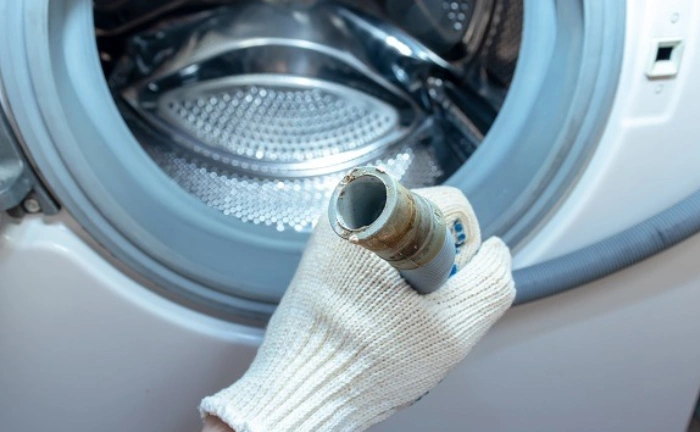
The cycle ends and the water is still sitting in the drum. Or the machine stops halfway through a program with an error code you don’t recognize. In most cases, a washing machine not draining water has a simple cause somewhere along the drain path: a pump filter packed with lint, a hose kinked behind the machine, or a coin that has reached the pump. It does not automatically mean the drain pump has failed.
This guide takes the causes in order, from easiest to hardest to fix. You’ll see how to check the filter and hose safely, and how to tell a blockage you can clear from a fault that needs a new part. You’ll also find notes for LG, Samsung and Daewoo machines, and what to check before buying a replacement drain pump.
Why Is My Washing Not Draining?
Used water follows a fixed path. It leaves the drum, passes the pump filter, goes through the drain pump, then the drain hose, and finally into your home’s drain pipe. A fault at any point leaves water in the drum. These are the usual causes.
A clogged pump filter. The filter catches lint, hair, buttons and small coins before they reach the pump. When it fills up, draining slows down, and eventually it can stop completely.
A blocked drain hose or drain pipe. The blockage may be in the hose itself, or in the household pipe the hose connects to, while the machine is perfectly healthy.
A kinked or compressed hose. This happens often when a machine is pushed tight against the wall. LG recommends leaving at least 10 cm (4 inches) between the back of the machine and the wall.
A foreign object inside the pump. If the filter is missing or damaged, hard objects can reach the impeller and jam or break it.
A failed drain pump. The fault can be mechanical, such as a damaged impeller, or electrical, such as a faulty pump motor.
A water level sensor or pressure switch problem. This sensor tells the electronic control board how much water is in the drum. If it misreads, the machine may think water is still there, or that it has already drained, when neither is true. Some repair sources report that a pressure system fault can trigger a drain error even when the water actually drained, but this needs a technician to confirm.
A control board fault. This is the last possibility. It should only be considered after everything above has been ruled out and a technician has diagnosed it.
| What you notice | Most likely cause |
| Water drains very slowly | Partly blocked filter or hose |
| Pump hums but no water leaves | Blockage or jammed impeller |
| No pump sound at all during draining | Electrical fault in the pump or board |
| Water flows normally when the hose is disconnected from the wall pipe | Blocked household drain pipe |
| Error code with water still in the drum | Real drainage problem, start with the filter |
Washing Machine Not Draining or Spinning: What Is the Connection?
The two problems often appear together, and the reason is simple. In most automatic washing machines the spin cycle comes after draining. The control board waits for the water level sensor to confirm the water has gone, then starts the spin cycle. If a blocked filter or hose keeps water in the drum, the program stalls at the drain step and never reaches spin. This also protects the machine from spinning fast with a full drum.
So if your washing machine is not draining or spinning, fix the draining first. If water drains normally afterward but the machine still won’t spin, the cause lies elsewhere. It could be an unbalanced load, a door that isn’t latching, the motor, or the control board, and that calls for a technician.
How to Check the Washing Machine Pump Filter
These are general steps. The filter’s location and the way it opens vary by model, so follow your user manual for the details.
- Unplug the machine before doing anything. Never open the filter while the machine is running.
- Let hot water cool down if the last cycle was hot. LG warns that the remaining water may be hot.
- Locate the filter. On many front loading machines it sits behind a small service cover at the bottom front.
- Place a shallow container and towels under the area. Water will come out when you open it.
- Use the emergency drain hose if your model has one. Not every machine does. If yours has one, pull it out, remove the cap and let the water run into the container.
- Remove the filter carefully following the manufacturer’s instructions. On many models it turns counterclockwise.
- Clear any lint, hair and small objects, and rinse the filter under running water. LG suggests an old toothbrush for cleaning.
- Reinstall it firmly and check for leaks by running a short drain or spin program.
Keep in mind that the pump filter is not the same as the lint filter or the mesh screens on the inlet hoses. The pump filter sits on the drain side and protects the pump. The inlet screens deal with the water coming in.
If you have a front loading LG and find the filter or its cap cracked or missing, Cool.sa offers the LG washing machine drain pump filter under part number 383EER2001A. The product page describes it as a genuine LG filter for applicable front loading washer and washer dryer models. This is a filter only, not a complete drain pump, and it doesn’t fit every LG machine, so compare the part number or your model before ordering.
How to Tell if the Drain Pump Is Bad
After cleaning the filter and checking the hose, these signs point toward the pump itself:
- Water stays in the drum even though the filter and hose are clear.
- The pump hums but no water leaves, which can mean a jammed or damaged impeller.
- You hear no pump sound at all while it should be draining.
- The problem continues after cleaning the filter and checking the hose.
- A drainage related error code appears while water remains in the drum.
These are indicators, not proof. A blocked household drain pipe or a faulty level sensor can look the same. LG describes a useful test: disconnect the drain hose from the drain pipe and run a short spin cycle. Put the end of the hose in a large container or over a floor drain, and keep towels nearby. If water flows out of the hose normally, the problem is in your home’s drain pipe, not the machine.
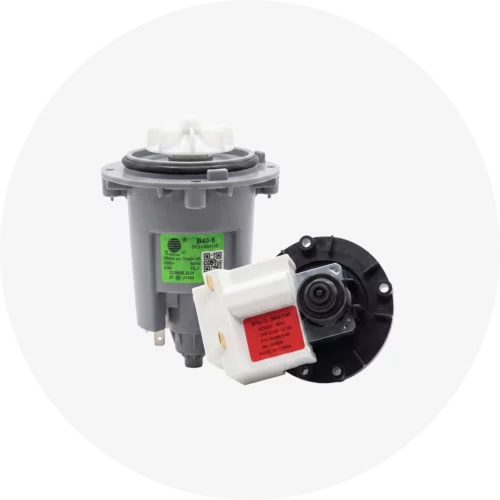
Filter and Hose All Clear? Time to Check the Drain Pump
Browse drain pumps for automatic washing machines at our Riyadh (Ghirnata and Yarmuk) and Khamis Mushait (Atud) branches, with delivery across the Kingdom. Check the part number, voltage and connector first, or send us the details on WhatsApp 0540663777.
Washing Machine Not Draining By Brand
LG Washing Machine Not Draining
LG machines show the OE code when there’s a drainage problem, which LG’s support page describes as a water outlet error. LG lists three main causes: a clogged drain pump filter, a kinked or compressed drain hose, and a frozen hose in cold conditions.
According to LG’s guidance, the pump filter sits behind the service cover at the bottom of the machine, next to a small hose for draining residual water. Twisting the pump cap releases the filter for cleaning. If the hose is kinked because the machine is pushed against the wall, leave at least 10 cm behind it.
An OE code does not mean the pump has failed. Start with the filter, then the hose, then the drain pipe test above. If the error stays, request a technical inspection.
Samsung Washing Machine Not Draining
Samsung uses several drain codes depending on the model, including 5E, 5C, SE, SC and nd. Check your manual to see which one applies to yours. Samsung advises cleaning the drain pump filter first, then making sure the drain hose isn’t kinked or blocked and is installed at the right height. Its Arabic support page for top loading machines says the standpipe should be 90 to 100 cm high and cover the hose completely.
Samsung also notes that if the error continues after these steps, the cause may be the drain pump or the control board, and you should contact support.
If a technician confirms the pump is at fault and your Samsung model uses part DC31-00054E, Cool.sa lists a Samsung washing machine drain pump DC31-00054E. The listing identifies it as a compatible replacement, not a genuine Samsung OEM part, and compatibility should be checked against your machine’s model.
Daewoo Washing Machine Not Draining
Daewoo machines share the same general causes: a blocked filter, a kinked hose or a faulty pump. If your automatic Daewoo washing machine is not draining water, work through the steps above. Don’t rely on error code lists from forums. The same code can mean different things on different models, and I couldn’t find an official source that confirms them. Always go back to your machine’s manual.
If the pump needs replacing, read the label on the old pump and the rating plate on the machine. Matching by appearance alone isn’t enough, and the next sections explain why.
When Do you Need to Replace the Washing Machine Drain Pump ?
What you found during the checks decides the fix:
- Blocked filter: clean it. No new part is needed. If the filter itself is cracked, replace just the filter.
- Blocked or kinked hose: clear the blockage or correct the routing.
- Foreign object in the pump: removal may solve it if the object is easy to reach and the impeller isn’t damaged. If the impeller or motor was damaged by it, the pump may need replacing.
- Mechanically or electrically failed pump: replacement is needed, after confirming the filter, hose and household pipe are all clear.
If the diagnosis points to the pump, have a qualified technician confirm it, especially if replacing it means opening the machine or touching electrical parts. Once the replacement is confirmed, you can browse washing machine drain pumps and match the part to your machine’s model and specifications.
How to Choose the Right Drain Pump for your Washing Machine
A drain pump can’t be bought by looks alone. Two pumps may seem identical and still differ in ways that prevent installation or safe operation. Check these points:
- Machine brand and exact model number.
- Original pump part number, printed on the old pump.
- Voltage and frequency specifications.
- Wattage, where it is listed.
- Electrical connector type and number of pins.
- Mounting arrangement and screw positions.
- Physical dimensions.
- Hose connection positions.
- Front loading or top loading design.
Take a photo of the old pump’s label and your machine’s rating plate before ordering. It’s the quickest way to confirm a match.
Here are two examples of what’s listed. The SX25-5D washing machine drain pump page states 30W and 220 to 240V at 50/60Hz. The BPX2-72L washing machine drain pump is a model specific pump, and its page asks you to verify mounting, connectors and other specifications first. These specifications help with comparison, but they don’t mean a part fits every machine. To see the full range, Cool.sa has a complete section for washing machine spare parts.
Frequently Asked Questions About Washing Machines Not Draining
Q1. Why is my washing machine not draining after the wash ends?
The most common causes are a clogged pump filter or a kinked drain hose. It can also be the household drain pipe or the pump. Check them in order, from easiest to hardest.
Q2. Does a clogged filter stop the machine from spinning?
Yes, on many models. The machine waits for the water to drain before starting the spin cycle, so if water remains, the program stalls.
Q3. Can I run the machine if it isn’t draining?
It isn’t recommended. Stop it, unplug it, remove the remaining water and look for the cause. Repeated attempts can strain the pump and cause leaks.
Q4. How do I know if my washing machine pump needs replacing?
When water remains even though the filter, hose and drain pipe are clear, especially with a hum but no draining, or no pump sound at all. Signs alone aren’t enough, so it’s best to have the diagnosis confirmed by a technician.
Q5. Can I clean the drain pump without replacing it?
Sometimes. If the blockage is a foreign object that’s easy to reach and the impeller isn’t damaged, removing it may be enough. A mechanical or electrical fault can’t be fixed by cleaning.
Q6. Why is my washing machine draining slowly?
Usually a partly blocked filter or hose, or a hose installed at an unsuitable height. It can also be an early sign that the pump is weakening.
Q7. What does an error code mean when the machine won’t drain?
It means the machine didn’t confirm the water had gone within the expected time. Codes differ by brand. LG’s code for this is OE, and Samsung uses codes such as 5E and 5C depending on the model. Don’t compare one brand’s codes with another’s.
Q8. Do drain pumps differ between automatic washing machines?
Yes. They differ in voltage, power, connectors, mounting, dimensions and hose positions, so never assume a pump from one machine will fit another.
Q9. How can I make sure a drain pump suits my washing machine model?
Match the part number on the old pump, then check the machine’s rating plate, electrical specifications, connector and mounting. If you’re unsure, send the seller a photo of the old pump and your model number to confirm before ordering.
Conclusion
When your washing machine is not draining water, the key is to find the real fault before buying anything. Start with the filter and hose, since they’re the easiest to check and the most common causes. If the problem remains, test the household drain pipe, then consider the pump. When choosing a replacement, confirm the model, part number, electrical specifications and mounting first. For anything electrical or mechanically complex, leave the work to a qualified technician.
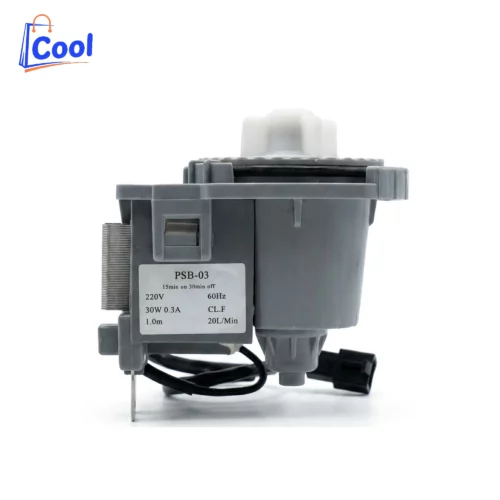
Not Sure Which Drain Pump Fits Your Machine?
Send a photo of the old pump’s label and your machine’s rating plate on WhatsApp 0540663777, and we’ll confirm the match before you order.
 English
 العربية