




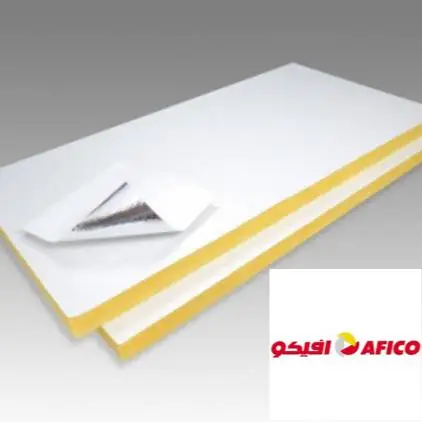
Board Insulation 48mm*48kg/m3
نطاق السعر: من ر.س28.00 خلال ر.س1,325.00 Inclusive of VAT
AFICO glass wool rigid board insulation, 48mm thickness, 48kg/m³ density. Inorganic glass fiber bonded with a non-water-soluble resin binder. Dimensionally stable under mechanical and thermal load. Used for HVAC duct lining, AHU lining, equipment insulation, and building thermal and acoustic applications. Saudi-manufactured for GCC climate performance. Available by board and by project quantity at cool.sa.
Key Features
- 48mm thickness standard for HVAC duct and equipment insulation
- 48 kg/m³ density rigid board form, maintains shape under mechanical load
- Inorganic glass fiber construction non-combustible, dimensionally stable
- Non-water-soluble resin binder, resists moisture-related binder breakdown
- Low thermal conductivity, reduces heat gain through insulated surfaces
- Acoustic absorption properties for AHU and duct lining
- AFICO manufacture Saudi-produced for GCC humidity and temperature conditions
- Available in multiple board sizes and project quantities
Note: THIS PRODUCT CAN ONLY BE SHIPPED VIA THE REGULER Z-SHIPPING SERVICE. YOU HAVE TO PICK UP FROM THE SHIPPING OFFICE.
AFICO manufactures in-Kingdom, calibrating binder chemistry, density consistency, and facing adhesion specifically for Saudi Arabia’s high humidity and extreme temperature cycling. Specified on Saudi Aramco projects, hospitals, and major commercial developments because local production outperforms imported boards designed for European conditions.
At 48mm thickness and 48 kg/m³ density, this rigid board holds its shape under the mechanical loads of AHU casing lining, duct fabrication, and equipment framing. Unlike flexible blanket, it stays flat, maintains adhesive bonds material, and eliminates thermal bridges, with non-combustible glass fiber construction that meets fire safety requirements organic foam insulation simply cannot.
HVAC Insulation Board Installation, Fixing, and Handling Guidelines
Cut the board to size with a sharp serrated knife and a straightedge. Blunt cutting compresses the edge and creates an uneven joint. Sharp serrated blade, single pass, clean cuts.
Apply HVAC-grade contact adhesive to both the board surface and the AHU panel or duct surface. Allow the adhesive to flash off for 60 to 90 seconds before bringing the surfaces together. Contact adhesive bonds instantly on contact, position the board correctly before pressing it down. You don’t get a second chance to reposition.
Secure with weld pins or mechanical fasteners at 300mm to 400mm spacing after the adhesive has set. Adhesive alone is not sufficient for HVAC board insulation in applications where air velocity or mechanical vibration is present. The pins or fasteners prevent the board from peeling away from the substrate over time.
All joints between boards must be taped with aluminum foil tape. An un-taped joint is a thermal bridge and an air bypass path. In Saudi chilled water duct applications where supply air is at 12 to 14°C inside a plant room at 40 to 45°C ambient, a 5mm gap in the insulation facing creates visible condensation on the outer duct surface within hours. Tape every joint.
For external duct insulation exposed to mechanical damage risk (plant rooms with foot traffic, maintenance access areas), protect the insulation surface with 0.5mm or 0.7mm aluminum cladding sheet over the insulation board and foil facing. Glass wool board has no structural resistance to impact, the aluminum cladding is the mechanical protection layer.
Personal protective equipment, always wear gloves, long sleeves, and eye protection when cutting and handling glass wool board. Glass fiber skin irritation is not dangerous but it’s uncomfortable. Saudi summers mean short sleeves are the norm, keep PPE on during handling regardless.
Annual Inspection of Insulated HVAC Ducts and AHU Linings
Inspect insulated duct and AHU surfaces annually. Look for:
Condensation or water staining on the outer face: This means either a break in the insulation or facing, or the insulation has been compressed to less than its design thickness somewhere along the run. Find the gap and re-tape or re-apply board.
Soft spots or sagging on vertical duct faces: Board that has de-bonded from the adhesive creates a void space between the insulation and the duct wall. That void space is a condensation chamber. Re-bond with additional adhesive and pins.
Damaged facing on AHU interiors: Perforated aluminum facing on AHU board lining gets damaged during coil cleaning and maintenance. Replace damaged sections promptly exposed glass fiber in an air-side environment sheds fibers into the airstream.
Compression at support brackets and hangers: Duct hangers passing through insulated duct sections compress the board at contact points, reducing insulation thickness locally. Thermal bridging at these points creates external condensation spots. Use proper insulated hanger shields at these locations.
Why Buy Board Insulation 48mm / 48kg/M³ From Cool.Sa
AFICO board insulation is specified on the largest HVAC and MEP projects in Saudi Arabia. cool.sa supplies AFICO products to MEP contractors, insulation subcontractors, and facilities teams across the Kingdom.
Available by individual board for small jobs and by project pallet quantity for major contracts. Project pricing is available for volume orders — contact us with your project quantities and we’ll confirm pricing and delivery.
SASO compliance documentation and product data sheets are available on request with every order.
Reach us at sales@cool.sa or +966 54 066 3777.
FAQ
Q1. What is the difference between glass wool board and foam insulation?
Glass wool board is inorganic and non-combustible. Foam insulation (polyurethane, PIR, EPS) is organic and combustible. For occupied commercial buildings subject to Saudi Civil Defense and SASO fire safety requirements, glass wool is typically the compliant choice for internal duct lining and AHU panels.
Q2. Is 48kg/m³ density appropriate for HVAC duct lining?
Yes. 48 kg/m³ is the standard medium-density rigid board used for HVAC duct lining and AHU applications where insulation is protected by a facing. For direct airstream exposure at higher air velocities, a higher density board or a duct liner with a reinforced air-side facing is recommended.
Q3. How is this board installed in an AHU panel?
Cut the board to size, apply contact adhesive to both surfaces, allow flash-off time, then press into position. Secure using weld pins at 300 to 400 mm spacing and seal all joints with aluminum foil tape.
Q4. Does this insulation comply with SASO requirements?
AFICO products are Saudi-manufactured and supplied with compliance documentation. Product data sheets and fire classification certificates should be requested at the time of order for verification.
 English
  العربية
Habib –
Worked well for RV vents to insulate for winter. Overall sustainable product .