




How to Clean a Washing Machine Properly: Drum, Filter, Seal and Drawer

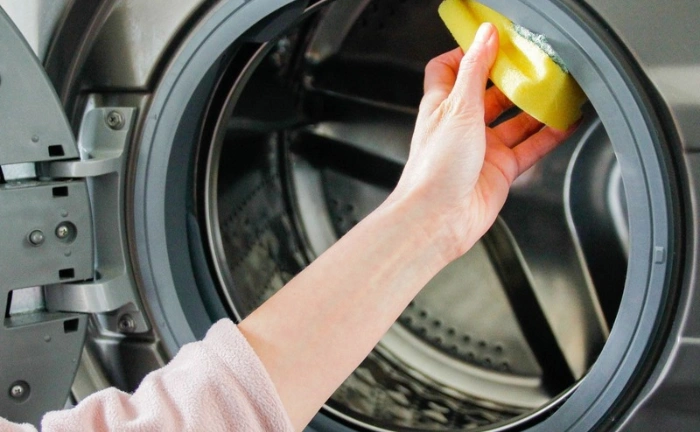
If your clothes come out smelling damp, or you can see grey marks on the door seal, the machine needs cleaning. This Cool.sa guide explains how to clean a washing machine properly, part by part: the drum, the filter, the rubber seal and the detergent drawer. It covers front-load, top-load and twin tub machines.
In Saudi homes the job matters even more. Heat and humidity help mould grow, especially in Jeddah, Dammam and other coastal cities. Hard water and heavy detergent use also leave limescale and residue that slowly block hoses and filters. A clean machine smells better, washes better and lasts longer, and it puts less strain on parts like the drain pump and inlet valve.
What you need
- White vinegar (خل أبيض) or a washing machine cleaner made for your type of machine.
- Baking soda (بيكربونات الصوديوم).
- Diluted bleach for mould, only if your manual allows it.
- An old toothbrush and a microfibre cloth.
- A shallow tray and towels for the water that comes out of the filter.
- Rubber gloves.
Safety: never mix vinegar and bleach. Together they release toxic chlorine gas. Use one, run a rinse cycle, then use the other another day. Unplug the machine before you open the filter or remove any panel.
How to clean a washing machine properly: the 6-step routine
This order works for most automatic washing machines (غسالة أوتوماتيك). Start with the parts that trap dirt, then run a hot cleaning cycle to rinse everything away.
- Clean the detergent drawer (درج الصابون).
- Clean the filter (الفلتر). On front-loaders this is the drain pump filter, and on many top-loaders it is the lint filter.
- Wipe the rubber door seal (جلدة الباب) on front-loaders.
- Run a hot drum-cleaning cycle with vinegar or a machine cleaner.
- Wipe the outside, the door glass and the lid.
- Leave the door and drawer open so the inside dries.
Each step is explained below, with the differences for front-load, top-load and twin tub machines. If you only remember one thing about how to clean washing machine parts, make it this: clean the filter and the seal first, then run the hot cycle.
How to clean the washing machine detergent drawer
Soap and softener build up in the drawer and its channels and turn into a sticky, mouldy layer. Once that layer forms, the water can’t wash the powder away properly.
- Pull the drawer out until it stops, then press the release tab (often marked PUSH) and lift it out.
- Soak it for 15–20 minutes in warm water with a spoon of baking soda.
- Scrub the corners and the softener siphon cap with a toothbrush.
- Clean the drawer housing inside the machine as well. Black mould often hides on its roof.
- Dry everything and put the drawer back.
How often: once a month, or every two weeks if you use liquid detergent or softener.
How to clean the washing machine filter
The filter catches coins, hair, lint, hairpins and tissue. When it clogs, the machine drains slowly, leaves clothes wet, shows a drain error, or starts to smell. Learning how to clean the washing machine filter is the single most useful maintenance skill. Many “my washer won’t drain” problems are just a full filter.
Front-load drain pump filter
- Unplug the machine and place towels and a shallow tray under the bottom front corner.
- Open the small cover panel. Most front-loaders have it at the bottom left or right.
- If there is a small emergency drain hose, pull it out and drain the water into the tray first.
- Turn the filter cap anticlockwise slowly. More water will come out.
- Remove the dirt, rinse the filter under the tap and clean the opening with your fingers or a cloth.
- Screw the filter back in tightly so it doesn’t leak, close the panel and run a short rinse.
Top-load and twin tub lint filter
Many top-loaders and most twin tubs (غسالة حوضين) have a lint filter (فلتر الوبر) instead. It is a small mesh bag or plastic catcher on the side of the drum. Pull it out, empty it, rinse it and clip it back in. If the mesh is torn, replace it, because lint will pass through and block the drain.
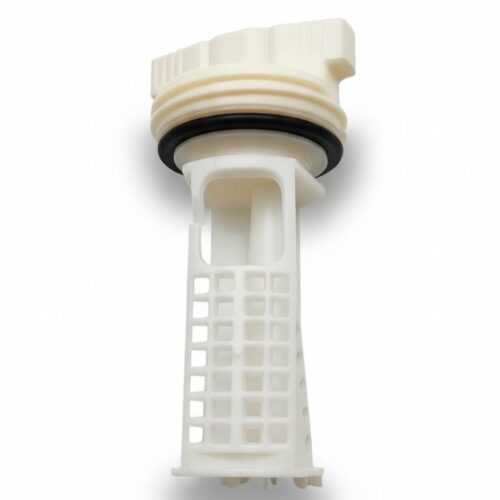
Filter torn or drain pump worn out?
If the mesh is torn, or the machine still won’t drain after you clean the filter, the part may need replacing. You can order the replacement from Cool.sa.
How often: every 1–3 months for the drain filter, and after every few washes for a lint filter. Check them right away if you wash pet bedding or very linty fabrics.
If the drum still holds water after the filter is clean, read the Cool.sa guide on why a washing machine stops draining.
How to clean the washing machine rubber seal
The door seal (جلدة الباب) on a front-loader is where most mould and bad smell starts. Water, lint and detergent sit in its folds after every wash.
- Pull back the folds of the seal and look all the way around, especially at the bottom.
- Wipe out hair, lint and any coins or hairpins.
- Spray or wipe with a 50/50 mix of white vinegar and water, then scrub the folds with a toothbrush.
- For black mould, use a weak bleach solution if your manual allows it, and wear gloves. Leave it for a few minutes, then wipe it off with clean water.
- Dry the seal completely with a cloth.
If the seal is cracked or torn, cleaning won’t stop the leak or the smell. The seal needs replacing.
How often: wipe the seal dry after the last wash of the day, and deep-clean it every month.
How to clean the washing machine drum
The drum (الحلة or الحوض) looks clean, but limescale, detergent residue and bacteria build up on the outer tub that you can’t see. A hot cleaning cycle reaches it.
With vinegar
- Make sure the drum is empty.
- Pour 2 cups of white vinegar straight into the drum.
- Run the hottest, longest cycle, such as Cotton 90°C or the Tub Clean or Drum Clean programme if your machine has one.
- Add half a cup of baking soda to the drum and run a second short hot cycle to rinse.
- Wipe the inside of the drum and the door glass dry.
With a washing machine cleaner
If your manufacturer advises against vinegar, use a cleaner made for washing machines and follow its instructions. Some brands say regular vinegar can dry out rubber parts over time.
How often: once a month. Do it more often if you mostly wash at 30–40°C, because low temperatures never kill the bacteria inside the tub.
How to clean a front load washing machine
Front-loaders (غسالة تعبئة أمامية) use little water and have a tight door seal. That saves water, but it also traps moisture. When you clean a front load washing machine, focus on three things:
- Door seal: clean its folds every month. This is the main source of smell.
- Drain pump filter: clean it every 1–3 months.
- Tub Clean cycle: run it monthly with vinegar or a cleaner.
Always leave the door slightly open between washes. A closed door on a wet drum is the fastest way to grow mould.
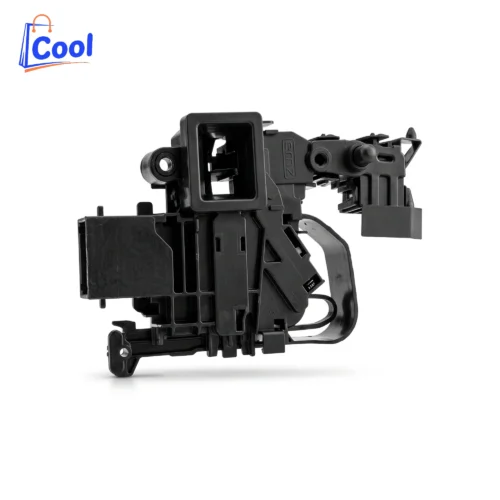
Door not locking after cleaning?
If the door won’t latch or the machine shows a door error, the lock may be faulty. Locks differ by brand, so send us a photo of your old lock and we’ll confirm the match.
How to clean a top load washing machine
Top-loaders (غسالة تعبئة علوية) collect dirt under the rim of the tub and around the pulsator or agitator. Here is how to clean a washing machine top loader step by step:
- Fill the drum with the hottest water your machine allows, up to the highest level.
- Add 2–4 cups of white vinegar, or a top-load washer cleaner.
- Let it agitate for a minute, then pause the cycle and let it soak for about an hour.
- While it soaks, wipe under the lid, the rim of the tub and the fabric softener cup.
- Restart the cycle and let it drain and spin.
- Run a second hot cycle with half a cup of baking soda, then clean the lint filter.
If your top-loader has a Tub Clean button, use that programme instead. It is designed for your machine.
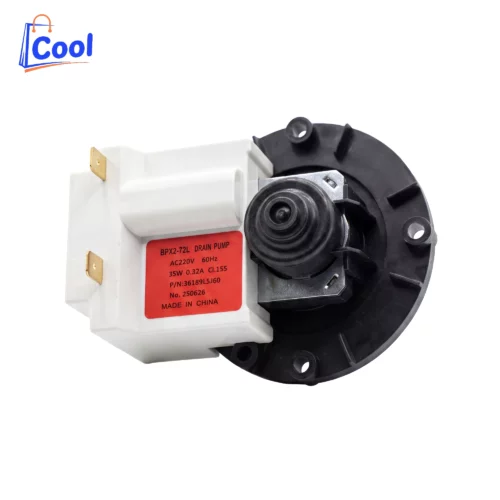
Top-loader still won’t drain or spin?
If cleaning doesn’t help, the drain pump or the drain pipe may be the problem. These are common replacements:
How to clean an automatic washing machine from inside
The monthly routine above is how to clean an automatic washing machine on the surface. To clean an automatic washing machine from inside, you need to reach the parts the drum cycle can’t: the inlet hose screens and the water path. A blocked screen causes slow filling and error codes.
- Turn off the water tap and unplug the machine.
- Unscrew the inlet hose (خرطوم الدخول) from the back of the machine.
- Look inside the inlet valve (بلف الماء) port. You will see a small mesh screen.
- Pull it out gently with pliers, rinse it and brush off any sand or scale.
- Refit the screen and the hose, open the tap and check for leaks.
Sand and scale from water tanks are common in Saudi buildings, so check the screens every 3–6 months. If the hose is cracked or the valve still doesn’t fill after cleaning, replace it.
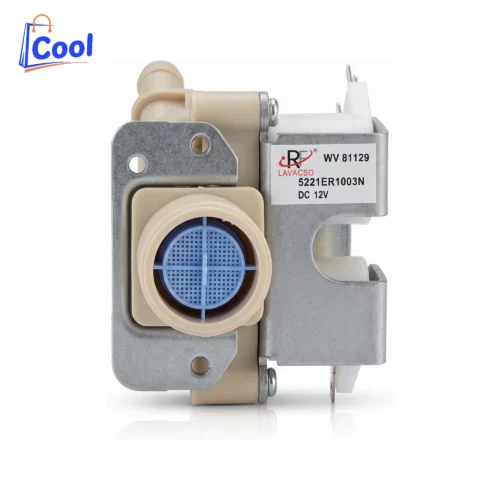
Slow filling or leaking inlet hose?
Replace a cracked hose or a failed inlet valve. Match the voltage and outlet count of your old valve. These are available at Cool.sa:
How to remove bad smell from washing machine
A musty smell usually means one of four things. Work through them in this order:
| Where the smell comes from | What to do |
|---|---|
| Door seal folds | Clean them with vinegar and water, then dry. Leave the door open after washing. |
| Clogged drain filter | Clean the filter. Trapped lint and old water rot quickly in the heat. |
| Detergent drawer | Remove it and soak it. Clean the mould in the housing as well. |
| Drain hose or standpipe | Check that the hose isn’t sagging and holding water, and that the drain isn’t blocked. A smell like sewage often comes from the house drain, not the machine. |
After cleaning, run a hot cycle with vinegar or baking soda. Then use the right amount of detergent. Too much soap is a common cause of residue and smell.
How to remove mold from washing machine
Black spots on the seal, the drawer or under the lid are mould. To remove it:
- Wear gloves and keep the room ventilated.
- Scrub light mould with a paste of baking soda and water.
- For stubborn mould, wipe with a weak bleach solution if your manual allows it, leave it for 5–10 minutes, then rinse with clean water.
- Run a hot empty cycle afterwards.
- If mould has grown deep into the rubber seal, it may not come out. Replacing the seal is the only lasting fix.
To stop mould coming back, leave the door and drawer open, wash at 60°C at least once a week, and remove wet clothes as soon as the cycle ends.
How often should you clean your washing machine?
| Task | How often |
|---|---|
| Wipe and dry the door seal | After the last wash of the day |
| Leave the door and drawer open | After every wash |
| Clean the lint filter (top-load, twin tub) | Every few washes |
| Clean the detergent drawer | Monthly |
| Hot drum-cleaning cycle | Monthly |
| Clean the drain pump filter (front-load) | Every 1–3 months |
| Check the inlet hose screens | Every 3–6 months |
| Check hoses for cracks | Every 6 months |
Washing machine maintenance tips
- Use the right detergent. High-efficiency (HE) or front-load detergent foams less. Measure it, don’t guess.
- Don’t overload. An overloaded drum wears the bearings and shock absorbers and washes badly.
- Empty pockets. Coins and hairpins jam the drain pump.
- Keep the machine level. A machine that rocks wears its suspension.
- Watch for early signs. Slow draining, new noises or a door that won’t lock are warnings. The Cool.sa washing machine parts guide explains which part causes each symptom.
- Twin tubs need care too. Clean the lint filter and dry both tubs. For more, see Cool.sa’s twin tub washing machine guide.
When cleaning isn’t enough
Knowing how to clean a washing machine properly solves most smell and residue problems. Cleaning fixes smell, slow draining caused by a full filter, and most residue problems. It won’t fix a broken part. Cool.sa stocks spare parts for automatic and twin tub washing machines. Consider a replacement if:
| Problem after cleaning | Likely part |
|---|---|
| Still won’t drain, or hums when draining | Drain pump |
| Fills slowly or doesn’t fill at all | Inlet valve |
| Door won’t lock, or the machine won’t start | Door lock |
| Leaks from the front | Door seal |
| Shakes or walks during spin | Shock absorbers |
| Twin tub timer won’t run or won’t stop | Washing machine timer |
FAQ
How do I clean my washing machine with vinegar and baking soda?
Put 2 cups of white vinegar in the empty drum and run the hottest cycle. Then add half a cup of baking soda and run a short hot cycle to rinse. Don’t use them in the same cycle, because they cancel each other out.
Can I use bleach to clean my washing machine?
Many manufacturers allow diluted bleach for mould, but check your manual first. Never mix bleach with vinegar or other cleaners.
Why does my washing machine smell even after cleaning?
Check the drain filter and the drain hose. A clogged filter or a hose holding water keeps the smell coming back, even when the drum is clean.
How do I clean a washing machine drum without a Tub Clean programme?
Use the hottest and longest cotton cycle with vinegar or a machine cleaner, and nothing else in the drum.
How often should I clean the washing machine filter?
Every 1–3 months for a front-load drain filter, and every few washes for a top-load or twin tub lint filter.
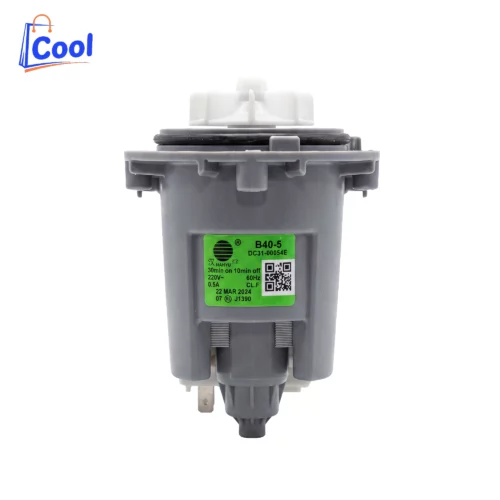
Cleaned It, But It Still Has a Problem?
Send a photo of your machine’s rating label and the problem on WhatsApp 0540663777, and the Cool.sa team will help you find the right part. Visit our Riyadh (Ghirnata and Yarmuk) and Khamis Mushait (Atud) branches, with delivery across the Kingdom.
 English
 العربية